 By Terje Berg-Hansen
 There are people and organisations working to raise awareness against ongoing wars, and there are people and organisations working to raise awareness of environmental issues, but there seems to be little awareness of the obvious connection between the two.
Pollution, health and global warming
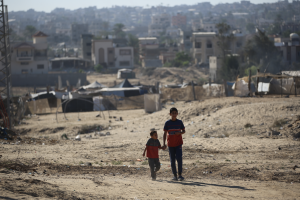 Wars are devastating for the natural environment, driving mass deforestation, heavy carbon emissions, and long-term soil and water pollution. Militaries are estimated to account for roughly 5.5% of global greenhouse gas emissions, while the physical destruction of infrastructure leads to lasting ecological and public health crises
Massive Carbon Footprint: Military equipment consumes immense quantities of fossil fuels. Jets and military vehicles consume petroleum-based fuels at an extremely high rate, and the vehicles used in the war zones produce tons of carbon monoxide, nitrogen oxides, hydrocarbons, and sulfur dioxide in addition to CO2. Post-conflict reconstruction—specifically the production of cement—further amplifies these emissions.
Chemical and Toxic Pollution: Bombing campaigns, artillery, and missile strikes release heavy metals, dioxins, white phosphorus, and depleted uranium into the soil and atmosphere. The targeting of fossil fuel depots and industrial facilities causes massive oil spills and toxic chemical fires that devastate local ecosystems and marine life.
Water and Infrastructure Collapse: The destruction of water pipelines, sanitation facilities, and power grids leads to untreated sewage and chemical runoff seeping into groundwater. This directly destroys aquatic life and spreads waterborne diseases among local populations.
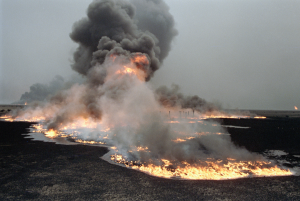
Health Hazards: Residents of war zones and soldiers suffer many negative health consequences of war’s environmental wreckage. Bombs and other munitions contain toxic substances, including heavy metals, white phosphorus, depleted uranium, and dioxin, that, in addition to causing horrific injuries, contaminate soil, water, and vegetation in the aftermath of fighting. Explosive weapons destroy buildings, generating debris and releasing hazardous materials such as asbestos, industrial chemicals, and fuels. Explosives also destroy water supplies and sanitation facilities, leading to pollution from sewage and solid waste. In rural areas, bombing decreases soil quality and inhibits agriculture by disrupting topography, forming craters, and altering drainage patterns.
U.S. military bases in Iraq, Afghanistan, and elsewhere contaminate their surrounding environments with oil spills and other toxic chemicals. U.S. military burn pits – open air incinerators used to burn broken-down tanks, the detritus of weapons, computers, batteries, aerosols, metals, and many other types of industrial, military, and medical debris – contaminate the air, ground water, and soil and expose soldiers and civilians to dangerous health pollutants.
Landmines and Unexploded Ordnance: Leftover explosive remnants of war contaminate vast tracks of land. This renders agricultural soils hazardous and creates restricted “dead zones” that disrupt local ecosystems for decades. Unexploded remnants of war remaining in the land injure and kill people for years after the active fighting has ended.
Here are some key findings from recent wars
- The U.S. Department of Defense is the world’s single largest institutional consumer of oil – and as a result, one of the world’s top greenhouse gas emitters. It is estimated that the U.S. military has emitted more than 1.2 billion metric tonnes of Greenhouse Gases since the “war on terror” in 2021. This is equivalent to the annual emisions of 257 million passenger cars, more than double the amount of cars on the road in the U.S.
- Environmental contamination is an important and understudied causal pathway to “indirect deaths” due to war. For example, U.S. service members have suffered from respiratory problems, headaches, and cancers due to their exposure to burn pits in Iraq, and local people living near burn pits say they have similar symptoms.
- People who live, or return to live, in bombarded areas may be at a higher risk of reproductive health harms and other health problems such as cancer. The population of Fallujah, Iraq faced a 17-fold increase in birth anomalies linked with bombardments from the 2003 U.S. invasion and later occupation by ISIS. Bone sampling research in Fallujah detected high rates of environmental toxins.
- Afghanistan is one of the most landmine- and unexploded ordnance-impacted countries in the world. From 2001 through 2018, the Afghanistan government reported 14,693 civilians injured and 5,442 killed from landmines and other explosive remnants of war.
- Many U.S. and U.K. workers in military industries are frustrated with the environmental costs of their field and would welcome a transition to working in the green economy. The military can redirect its weapons and technological production capacity towards civilian uses and decarbonize the U.S. economy, given the right policy environment
- In Gaza, there has been complete degradation of the soil, water, land, and agriculture. Sewage, wastewater, and solid waste management systems and facilities have collapsed. The destruction of buildings, roads, and other infrastructure has generated millions of tons of debris, some of which is contaminated with unexploded ordnance, asbestos, and other hazardous substances.
- One indicator of the impacts is the increasing rates of communicable diseases in Gaza. In the three months following the escalation of conflict, the World Health Organization reported 179,000 cases of acute respiratory infection and 136,400 cases of diarrhoea among children under five—a clear indication of the impact of the destruction of public works.
- During the 34-day war between Israel and Lebanon in 2006, the bombing of the Jiyeh power plant in Lebanon resulted in the release of 10,000 to 15,000 tons of oil into the Mediterranean Sea, affecting most of the Lebanese coastline and partly extending into Syria. The spill resulted in the deaths of seabirds and marine life.
- In Gaza, Greenpeace MENA analysis has highlighted severe damage to water, sanitation, cropland and fisheries, alongside estimates that the first 120 days of the war generated more than half a million tonnes of carbon dioxide. That combination of bombardment, infrastructure collapse and pollution makes a place harder to inhabit, less healthy and less resilient to climate breakdown.
- Ukraine has made this damage unusually visible. Greenpeace Central and Eastern Europe, together with the Ukrainian organisation Ecoaction, launched an environmental damage map built from almost 900 collected cases, with 30 of the most serious verified by satellite imagery to show how Russia’s illegal invasion has damaged land, habitats, water and air. Documenting this destruction is essential not only for accountability, but also for planning reconstruction and nature restoration in parallel.
- Ukraine also shows how war magnifies and weaponises the environmental risk of nuclear infrastructure. Greenpeace Ukraine and Greenpeace Central & Eastern Europe have repeatedly warned that the Russian occupation of the Zaporizhzhia nuclear power plant (Europe’s largest nuclear power plant) has created an ongoing nuclear safety and security crisis. There is no credible nuclear safety, security or legal basis for restarting reactors at Zaporizhzhia while the site remains under Russian military and Rosatom control, and it has warned that any restart would sharply increase the risk of a nuclear disaster.
- This is not new. During the Vietnam war, US forces sprayed almost 80 million litres of herbicides, including Agent Orange, affecting roughly 2.9 million hectares of land and leaving dioxin in soils, water and food chains for decades. In Iraq, UNEP and later field investigations warned of long-term environmental and health risks linked to depleted uranium contamination and other toxic remnants of war. These older conflicts matter because they show that the environmental damage of war does not end with a ceasefire.
The lesson running from Vietnam and Iraq to Gaza and Ukraine is simple. War contaminates the conditions for life itself. It degrades land, water, air and health in ways that can shape people’s lives for generations, especially where the fighting meshes with chemicals, oil, radiation risks and damaged public infrastructure.
The Proutist conclusion
Individual states cannot be allowed to create environmental disasters that affect every living being on this planet, present and future generations alike. We need a global authority, a World Government, backed by a World Military that can enforce rules that prevent rogue nations from destroying our planet. We cannot afford not to.
Links to material used in this presentation:
- The Watson School of International and Public Affairs – https://costsofwar.watson.brown.edu/costs/environmental
- The U.N. – https://www.un.org/en/peace-and-security/how-conflict-impacts-our-environment
- Greenpeace – https://www.greenpeace.org/international/story/82201/iran-lebanon-war-environment-climate-impacts/